Key Takeaways
- Dry, split firewood generally burns more steadily and produces less smoke than wet wood.
- A moisture meter provides a more reliable readiness check than appearance alone.
- Firewood should be raised above the ground, covered on top, and open on the sides.
- Untreated firewood should be sourced near the place where it will be burned whenever possible.
- Painted, treated, glued, or coated wood does not belong in a fireplace, stove, or fire pit.
- Safe wood burning also requires attention to the appliance, chimney, alarms, and local restrictions.
Whether it is used for a fireplace, a wood stove, or a backyard fire pit, good firewood should be dry, split, clean, and suited to how it will be burned. The right preparation helps create steadier flames, useful heat, and less irritating smoke.
Firewood quality is not just about wood species. Moisture content, storage conditions, log size, and safe burning habits all affect how well a fire performs. Learning to assess each of these factors can help homeowners avoid smoky fires, excess soot, and wasted fuel.
Why Firewood Quality Matters
Wet wood must use much of the fire’s energy to evaporate internal water before it can burn efficiently. Common warning signs include hissing logs, sluggish flames, heavy smoke, darkened glass doors, and rapid soot buildup. Wood smoke can also affect nearby households, especially when a fire is smoldering instead of burning cleanly.
Dry wood is only one part of the equation. Draft, appliance condition, and chimney maintenance matter as well. The EPA recommends burning split, seasoned wood, keeping stacked wood dry and well-ventilated, and using a moisture meter to confirm it is ready.
How to Choose the Right Wood
Hardwoods such as oak, hickory, and maple are often valued for their dense structure, which can produce longer-lasting coals. Softer woods can be useful for kindling, quick starts, or shorter outdoor fires. Regardless of species, wood that is too wet will burn poorly. Good tree care practices can also help homeowners make thoughtful decisions about fallen limbs, pruning debris, and wood that may be appropriate to process locally.
Signs of Usable Firewood
- End grain has visible cracks or checking.
- Bark is loose, dry, or beginning to peel away.
- The piece feels lighter than a freshly cut log of similar size.
- The wood has a dull, weathered surface rather than a freshly cut appearance.
- The material is natural and untreated, with no paint, stain, glue, plastic, or chemical coating.
How to Check Moisture Content
A moisture meter is a simple tool for checking whether firewood has dried sufficiently. For the most useful result, split a sample log and press the meter pins into the newly exposed inner face, not the outer bark. Test several pieces from different parts of the stack because one dry log does not represent the whole supply.
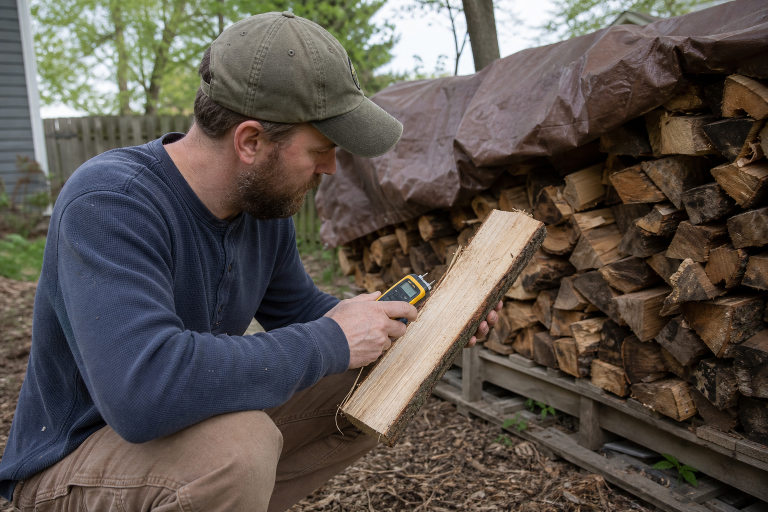
Wood near 20 percent moisture is a practical target for many home-burning situations. Higher readings usually mean more drying time is needed. Appliance instructions and local rules may set additional expectations, so those should always take priority.
How to Season Firewood
Seasoning is the natural drying process that begins after wood is cut and split. Splitting is important because it exposes more surface area, allowing moisture to escape more readily. Drying time varies with species, piece thickness, rainfall, humidity, sunlight, wind, and the way the stack is built.
A Simple Seasoning Plan
- Split large rounds soon after cutting.
- Stack wood loosely in a sunny, breezy location when possible.
- Raise the pile above soil, grass, or standing water.
- Cover only the top so rain is blocked without trapping humidity.
- Check moisture before moving a large amount of wood indoors.
How to Store Firewood Properly
Choose a well-drained location with consistent air movement. A rack, rails, or sturdy pallets can keep logs above damp ground and reduce contact with insects, rot, and splashback. Keep the pile away from dense shrubs, wet corners, and walls where airflow is limited.
Do not press a large firewood stack directly against a home, garage, shed, or chimney. Leave room to inspect the wood, remove decaying pieces, and discourage pests from settling near the structure. Arrange the stack so the oldest, driest wood is easiest to use first.
How to Reduce Pest and Disease Risks
Firewood can carry insects, eggs, and tree diseases even when it looks clean on the outside. Guidance from programs that discourage moving firewood long distances emphasizes buying wood where it will be burned, gathering it on-site only where permitted, and using certified heat-treated wood when required.
- Check campground, city, county, and state restrictions before transporting wood.
- Use all locally purchased campsite wood before leaving the area.
- Do not assume brushing bark or visible insects away removes the risk.
- Inspect piles periodically for obvious insect activity, moisture damage, and unstable stacking.
How to Burn Firewood More Safely
Burn only natural, untreated wood. Never burn pressure-treated lumber, painted boards, plywood, particleboard, household trash, or wood coated with adhesives. These materials can release harmful pollutants and may damage heating equipment.
Indoor and Outdoor Safety Checks
- Use dry kindling and never use gasoline or similar accelerants.
- Open the damper before lighting an indoor fire.
- Keep rugs, furniture, and other flammable items away from the hearth.
- Use a spark screen when appropriate and never leave a fire unattended.
- Keep smoke alarms and carbon monoxide alarms installed, tested, and supplied with working batteries.
- Have chimneys, flues, and wood-burning appliances inspected according to manufacturer guidance.
- Allow ashes to cool completely in a metal container before disposal.
Common Firewood Mistakes
- Covering the entire pile with plastic: It can trap moisture and slow drying.
- Stacking logs on bare soil: Ground contact encourages rot and moisture absorption.
- Burning freshly cut wood: Green wood often produces excessive smoke and low heat.
- Storing a large pile indoors can bring insects inside and put extra fuel near living areas.
- Trusting appearance alone: A dry-looking exterior does not prove that the interior is dry.
Frequently Asked Questions
How long should firewood dry?
Drying time depends on species, split size, weather, and storage conditions. Rather than relying only on a calendar, test the freshly split interior of several logs with a moisture meter.
Should firewood be covered?
Yes, but cover the top rather than wrapping the entire stack. The goal is to protect the pile from rain while keeping the sides open for ventilation.
Can moldy firewood be burned?
Light surface mold can develop when wood has been stored in damp conditions, but rotten, wet, or heavily moldy wood is a poor choice because it tends to smoke and burn inefficiently. Set aside compromised pieces and improve airflow in the stack.
What is the best firewood for a fireplace?
Dry, split, untreated wood is the essential requirement. Dense hardwoods are often preferred for longer burns, while smaller dry pieces are helpful for starting the fire.